
MBA in Marketing
Introduction
In today’s competitive business world, marketing is the key to success—whether you’re building a brand, driving sales, or expanding into new markets. Companies are actively seeking marketing professionals who can think strategically, analyze consumer behavior, and lead digital transformations. If you’re ready to take your career to the next level, the MBA in Marketing at Hallford University is the perfect step forward.
This program is designed to equip you with high-level marketing strategies, leadership skills, and industry insightsthat set you apart. Through expert-led courses on brand management, digital marketing, market research, and global marketing trends, you’ll gain the strategic mindset and practical expertise that employers demand.
With a flexible, self-paced format, you can earn your MBA without putting your career on hold. Whether you want to climb the corporate ladder, switch industries, or start your own business, this program gives you the skills, confidence, and credentials to succeed.
✅ 100% online – study anytime, anywhere
✅ Earn a recognized MBA degree and boost your resume
✅ Gain expertise in high-demand marketing fields
✅ Learn from industry professionals and experienced faculty
✅ Affordable tuition with flexible payment options
Program Objectives
The MBA in Marketing program aims to:
- Develop expertise in marketing strategies, consumer insights, and data-driven decision-making.
- Provide an in-depth understanding of brand management, advertising, and digital marketing trends.
- Equip students with leadership and problem-solving skills necessary for high-level marketing roles.
- Foster analytical and creative thinking to craft innovative marketing campaigns.
- Enhance knowledge of global marketing trends and emerging technologies in the industry.
Who Should Enroll in the MBA in Marketing?
The MBA in Marketing is designed for professionals who aspire to strategically lead marketing initiatives, drive brand growth, and shape consumer engagement in an evolving digital and global landscape. This program is ideal for individuals looking to deepen their understanding of marketing theories, data-driven decision-making, and leadership within corporate, entrepreneurial, or international business environments.
✔ Marketing Professionals – Those looking to deepen their knowledge in branding, consumer insights, digital marketing, and strategic decision-making to take on senior roles.
✔ Business Leaders & Managers – Entrepreneurs, business owners, and executives who want to drive business growth through effective marketing strategies and better understand market dynamics.
✔ Career Changers – Professionals from other industries looking to transition into marketing by gaining the theoretical foundation and practical skills required for success.
✔ Consultants & Analysts – Individuals seeking to expand their expertise in market research, data-driven marketing, and consumer behavior to provide high-level strategic insights.
✔ Aspiring CMOs & Marketing Executives – Those aiming for leadership roles in marketing and brand management, with a focus on decision-making, innovation, and long-term strategy.
With a flexible, self-paced structure and a curriculum designed for real-world application, this MBA program is tailored to meet the needs of ambitious professionals ready to lead in today’s marketing-driven business landscape.
Curriculum Overview
The MBA in Marketing program is designed to equip students with a comprehensive understanding of marketing principles, strategies, and analytical tools. This flexible one-year program requires a total of 2,000 study hours, allowing students to develop expertise at their own pace while balancing professional and personal commitments.
Program Duration:
- 1 Year (Flexible Learning)
- Total Hours: 2,000
| Module 1: Marketing Management | Description |
|---|---|
| 1.1 Understanding Marketing Concepts and Definitions | Introduction to key marketing principles, terminology, and real-world applications. |
| 1.2 Crafting a Value Proposition | Developing a unique value proposition to differentiate products/services in the market. |
| 1.3 Market Segmentation and Targeting | Identifying customer segments and targeting the right audience for maximum impact. |
| 1.4 The Role of Customer Satisfaction in Marketing | Understanding customer needs and ensuring brand loyalty through effective strategies. |
| 1.5 Evaluating and Adapting Marketing Strategies Over Time | Assessing marketing strategies and adjusting them based on market trends and business goals. |
| Module 2: Consumer Behavior | Description |
|---|---|
| 2.1 Psychological Influences on Consumer Behavior | Examining how motivation, perception, and cognitive biases shape consumer choices. |
| 2.2 Social Factors: Family, Reference Groups, and Culture | Understanding the impact of social networks, family influence, and cultural background on purchasing decisions. |
| 2.3 The Impact of Digital Media on Consumer Behavior | Analyzing how online reviews, social media, and digital ads affect buying behavior. |
| 2.4 Consumer Decision-Making Process Models | Exploring various models that explain how consumers evaluate and select products/services. |
| 2.5 How Emotions Influence Purchasing Decisions | Studying the role of emotions, brand attachment, and impulse buying in consumer behavior. |
| Module 3: Brand Management | Description |
|---|
| 3.1 Defining Brand Identity and Core Values | Establishing a brand’s mission, vision, and unique positioning in the market. |
| 3.2 Creating and Managing Brand Loyalty | Developing strategies to build long-term customer relationships and brand advocacy. |
| 3.3 The Role of Customer Experience in Brand Success | Understanding how customer interactions shape brand perception and influence loyalty. |
| 3.4 Measuring Brand Equity and Brand Performance | Evaluating brand strength through financial metrics, customer perception, and market positioning. |
| 3.5 Strategies for Brand Revitalization | Exploring methods to refresh or reposition a brand in response to market changes. |
| Module 4: Digital Marketing | Description |
|---|---|
| 4.1 Search Engine Optimization (SEO) Techniques and Best Practices | Understanding how to improve website visibility and rankings on search engines. |
| 4.2 Social Media Marketing Strategies (Facebook, Instagram, LinkedIn) | Leveraging social media platforms to build brand awareness and engage audiences. |
| 4.3 Pay-Per-Click (PPC) Advertising and Online Ad Strategies | Creating and managing paid advertising campaigns to drive targeted traffic. |
| 4.4 Creating and Optimizing Email Marketing Campaigns | Developing effective email strategies to nurture leads and convert customers. |
| 4.5 Using Analytics Tools to Measure Digital Campaign Success | Tracking and analyzing marketing performance through data-driven insights. |
| Module 5: Marketing Research and Analytics | Description |
|---|---|
| 5.1 Methods of Collecting Primary vs. Secondary Data | Understanding different data collection techniques for market research. |
| 5.2 Consumer Behavior Tracking and Analysis | Analyzing consumer activities, preferences, and purchasing patterns. |
| 5.3 Tools for Analyzing Large Sets of Consumer Data | Utilizing software and techniques to interpret big data for marketing insights. |
| 5.4 Creating Customer Personas and Segmentation | Developing detailed customer profiles to improve targeting strategies. |
| 5.5 Reporting and Interpreting Research Findings for Strategic Decision-Making | Transforming research data into actionable business strategies. |
| Module 6: Integrated Marketing Communications (IMC) | Description |
|---|---|
| 6.1 The Role of Storytelling in Brand Communication | Using narratives to create emotional connections with customers. |
| 6.2 Multi-Channel Marketing Strategies | Coordinating marketing efforts across digital, print, and traditional channels. |
| 6.3 Crafting Messages for Different Customer Segments | Tailoring marketing messages to resonate with diverse audiences. |
| 6.4 Crisis Management and Reputation Building Through IMC | Managing brand perception and responding to public relations challenges. |
| 6.5 Integrated Advertising Strategies Across TV, Digital, and Print | Developing cohesive advertising campaigns across multiple platforms. |
| Module 7: Sales and Distribution Management | Description |
|---|---|
| 7.1 Developing an Effective Sales Strategy | Creating a structured plan to drive sales growth and market penetration. |
| 7.2 Sales Forecasting and Pipeline Management | Predicting future sales trends and managing sales opportunities efficiently. |
| 7.3 Building and Maintaining Relationships with Key Distributors | Strengthening partnerships with distributors to ensure smooth product flow. |
| 7.4 Distribution Channel Selection and Optimization | Choosing the right distribution channels for maximum market reach. |
| 7.5 Training and Developing High-Performance Sales Teams | Enhancing the skills and efficiency of sales teams through targeted training. |
| Module 8: Global Marketing | Description |
|---|---|
| 8.1 International Market Entry Strategies | Exploring joint ventures, franchising, and licensing as market entry options. |
| 8.2 Adapting Marketing Campaigns to Local Cultures | Customizing marketing messages to align with cultural preferences and norms. |
| 8.3 Regulatory Considerations in Global Marketing | Understanding legal and compliance requirements in different markets. |
| 8.4 The Impact of Global Supply Chains on Marketing | Examining how supply chain logistics influence international marketing strategies. |
| 8.5 Digital Marketing’s Role in Reaching International Markets | Leveraging digital tools and platforms to expand global market presence. |
| Module 9: Strategic Marketing | Description |
|---|---|
| 9.1 Analyzing Competitors and Developing a Competitive Edge | Examining market competition to create differentiation and gain a strategic advantage. |
| 9.2 Strategic Market Segmentation and Targeting | Identifying and targeting specific customer segments for more effective marketing campaigns. |
| 9.3 Portfolio Management and Resource Allocation | Managing product and service portfolios to optimize growth and profitability. |
| 9.4 The Role of Innovation in Strategic Marketing | Leveraging innovation to stay ahead in competitive markets and drive business success. |
| 9.5 Monitoring and Evaluating the Success of Marketing Strategies | Using key performance indicators (KPIs) and analytics to measure marketing effectiveness. |
| Module 10: Marketing Leadership & Innovation | Description |
|---|---|
| 10.1 Leading Marketing Teams Through Change and Innovation | Strategies for guiding teams in adapting to market shifts and technological advancements. |
| 10.2 Identifying New Market Opportunities and Trends | Analyzing emerging trends and consumer needs to capitalize on new business opportunities. |
| 10.3 Fostering a Culture of Creativity and Innovation in Marketing | Encouraging innovative thinking and problem-solving within marketing teams. |
| 10.4 Managing Risk and Uncertainty in Dynamic Markets | Developing strategies to handle market volatility and competitive disruptions. |
| 10.5 Developing a Strategic Vision for Future Marketing Success | Crafting long-term marketing plans that align with business goals and industry evolution. |
Career Options After Graduation
Graduates of the MBA in Marketing program can explore a wide range of career opportunities, including:
- Marketing Manager – Oversee marketing campaigns and strategies to drive brand growth.
- Brand Manager – Develop and manage a brand’s identity and positioning in the market.
- Digital Marketing Specialist – Plan and execute online marketing campaigns, including social media and SEO.
- Market Research Analyst – Analyze consumer behavior and market trends to support strategic decision-making.
- Advertising Director – Lead advertising campaigns and promotional strategies.
- Sales Director – Develop and implement sales strategies to maximize revenue.
- Public Relations Manager – Enhance brand reputation through media and public relations efforts.
The MBA in Marketing program at Hallford University is your gateway to a successful career in the ever-evolving marketing industry. Enroll today and take the next step toward becoming a marketing leader!
Total Program Cost
Affordable & Transparent Pricing – Only $550
At Hallford University, we believe in making quality education accessible. Our MBA in Marketing program is designed to provide exceptional value at an affordable cost.
Cost Breakdown
| Description | Amount |
|---|---|
| Application Fee | $55 |
| Tuition Fee | $0 |
| Degree Certificate | $55 |
| Transcripts | $55 |
| Miscellaneous, Technology, & Other Fees | $385 |
| Total Cost | $550 |
Flexible Payment Options
We understand that financial flexibility is important, which is why we offer two convenient payment options:
✔ One-Time Payment – Pay the full program cost upfront for a hassle-free experience.
✔ Monthly Payment Plan – Spread your payments over 12 months at $55 per month, making it easier to invest in your education.
Start your MBA in Marketing with a clear and affordable payment structure designed to fit your financial needs. No hidden fees. No surprises. Just a straightforward investment in your future.
digital enrollment form (official)
Why Join Hallford University?
At Hallford University, we provide a world-class education designed for busy professionals and ambitious learners. Our programs are structured to give you the flexibility, expertise, and credentials you need to advance in your career.
1. Premier Business Programs
Hallford University offers top-tier programs in business and management, catering to professionals at different stages of their careers.
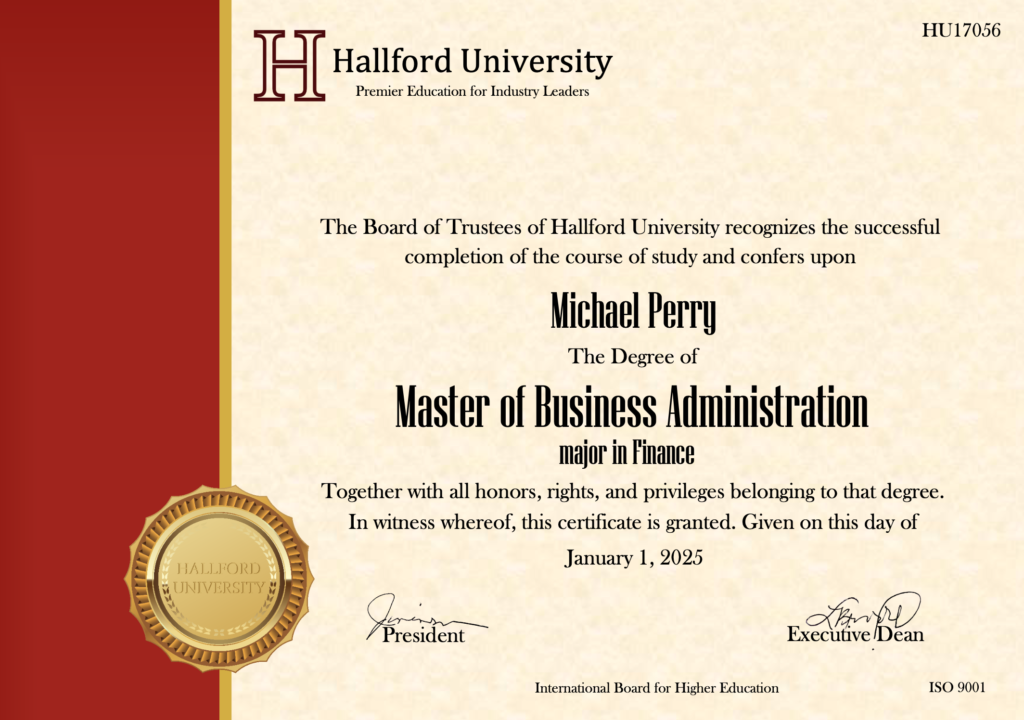
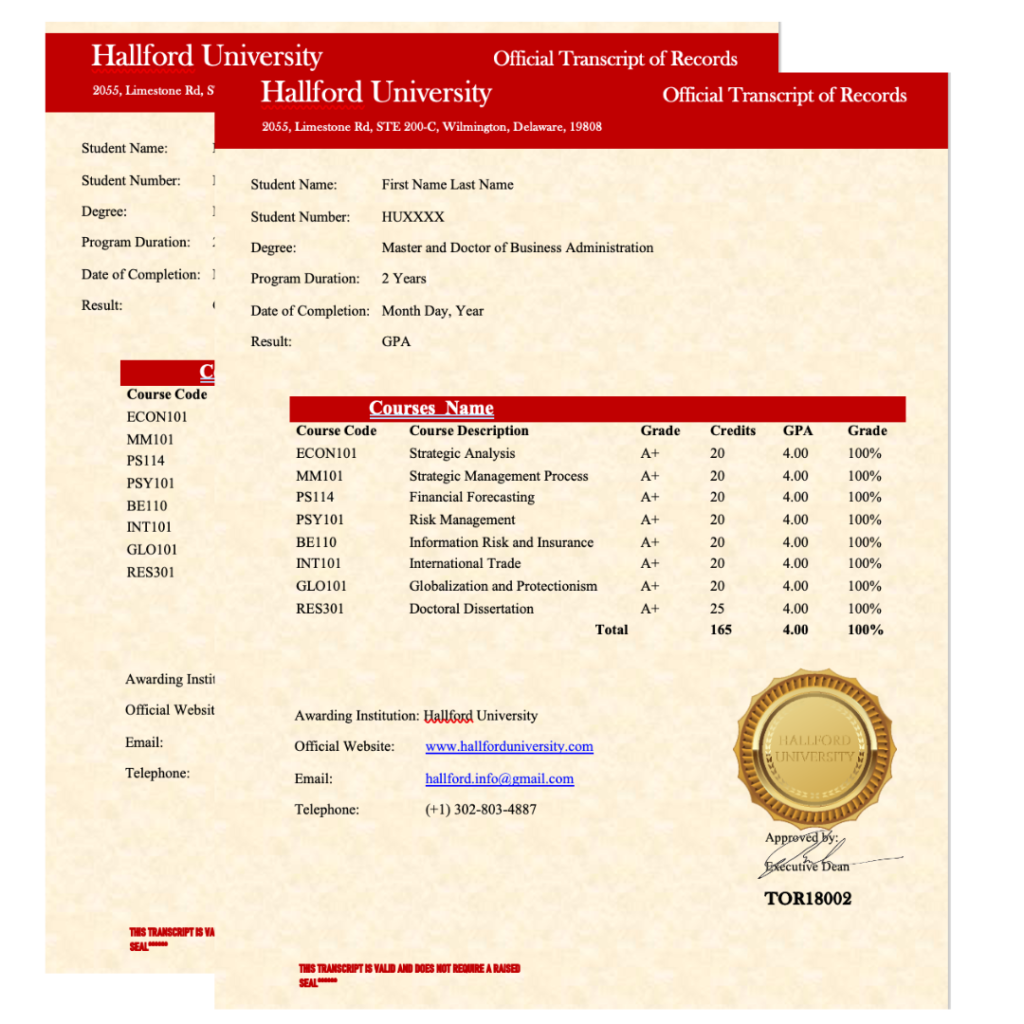
2. Receive Your Degree and Official Transcripts
Upon successful completion of your program, you will receive your degree certificate and official transcript of records, allowing you to showcase your qualifications confidently in the job market.
3. Learn from Expert Faculty
Our programs are taught by seasoned professionals and industry experts who bring real-world insights into the classroom, ensuring you gain practical knowledge that applies directly to your career.

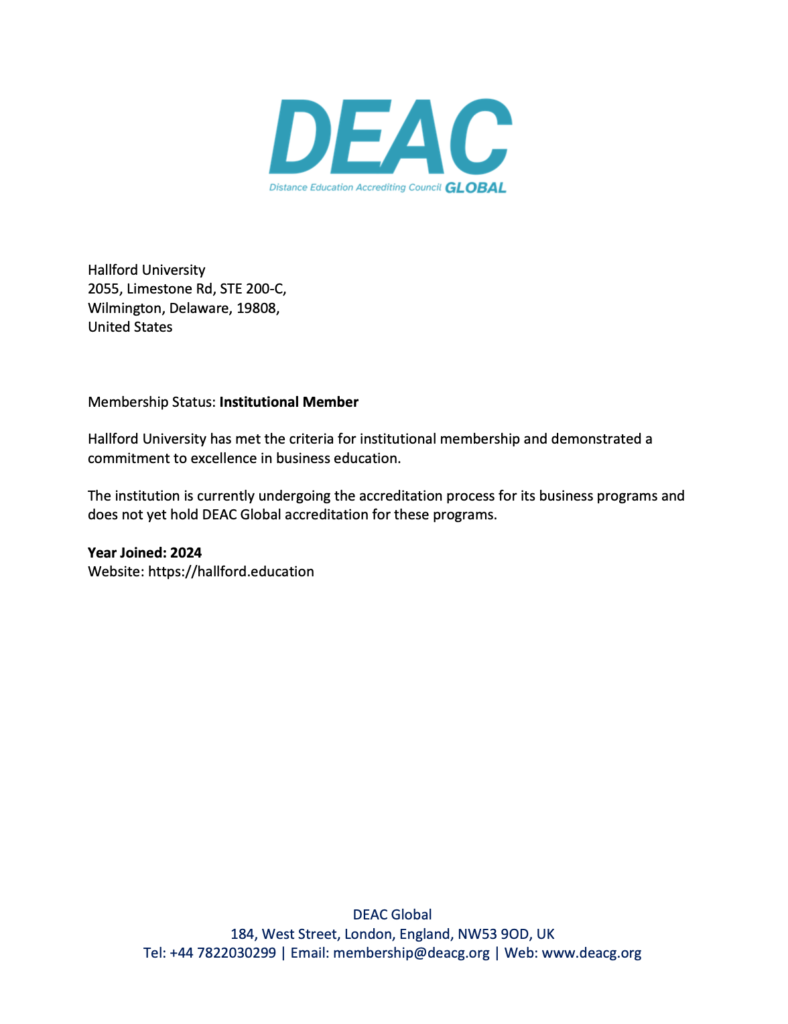
4. Recognized Accreditation
Hallford University is committed to academic excellence. We maintain high educational standards and are an institutional member of recognized accreditation bodies, giving you confidence in the value and legitimacy of your degree.

5. Study at Your Own Pace
We understand that professionals have demanding schedules. That’s why our programs are 100% self-paced, allowing you to study when it’s convenient for you. Whether you want to complete your degree quickly or take your time, the choice is yours.
6. Affordable & Cost-Effective
Higher education should be accessible. Our program fees are competitive and budget-friendly, ensuring you receive high-quality education without financial strain. We also offer flexible payment plans to make your learning journey even more manageable.
HEAR FROM OUR STUDENTS
If you’re on the hunt for the finest postgraduate school, Hallford is undoubtedly the ideal destination! The courses are of exceptional quality, and the online platform is truly impressive. I’ve gained a wealth of knowledge throughout my time here, and I couldn’t be happier with my decision to attend Hallford – it has been an incredible journey!

I had the privilege of studying at one of the world’s premier and highly respected global institutions, Hallford University. This remarkable institution has been instrumental in equipping me with the skills and knowledge necessary for my career advancement and professional growth. I am deeply grateful for the opportunity to have been a part of this esteemed establishment.

My decision to enroll at Hallford University for my online education has proven to be an excellent one. The courses are meticulously structured, and the professors are exceptionally knowledgeable. The course materials are not only current but also highly relevant, ensuring that I stay ahead in my field. I wholeheartedly endorse Hallford University to anyone seeking a top-notch online education.

My recent graduation from Hallford was an incredible experience. The course content was comprehensive, and the online learning platform was exceptionally user-friendly. I’ve already recommended Hallford to my friends and family, recognizing it as an outstanding avenue for pursuing a college education online.

I recently had the privilege of enrolling in an exceptional business program, and I can confidently say it has been a game-changer in my professional life. This course has exceeded all my expectations and has provided me with invaluable knowledge and skills that I know will shape my career for the better.

ACCREDITATIONS
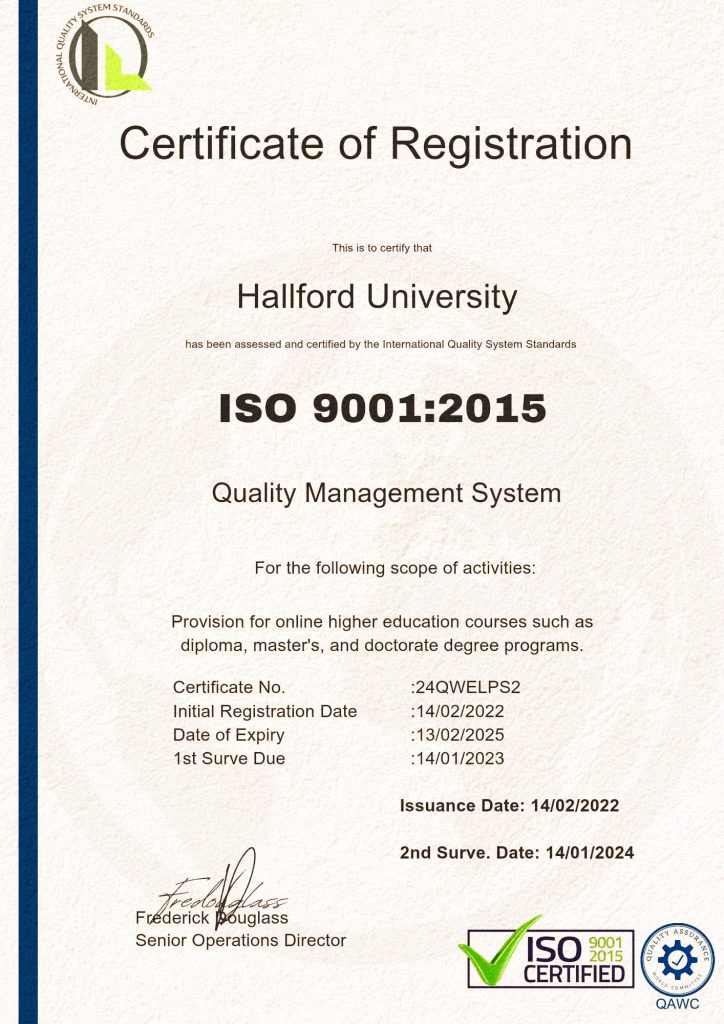
At Hallford University, we’re thrilled to share that we are an ISO 9001: 2015 certified organization and accredited by the International Board for Higher Education. These recognitions is like a badge of honor for us, and it signifies our deep commitment to providing top-notch education.
You might be wondering, what does accreditation really mean? Well, it’s like a seal of approval from experts in the field of education. They’ve taken a close look at our programs, our faculty, and our overall operations, and they’ve given us a big thumbs-up. It’s a way of saying that we’re doing things the right way and maintaining high standards.
This accreditation isn’t just a piece of paper; it’s a reflection of the hard work and dedication of our entire team, from our educators to our support staff. We’re all in this together, with one goal in mind: to provide you, our students, with an outstanding education.
IBHE Certificate of Accredition
What it means for you is that when you choose Hallford University, you’re choosing an institution that’s been recognized for its commitment to quality. You can trust that the education you receive here meets or even exceeds the standards set by experts in the field.
So, when you embark on your educational journey with us, know that you’re not just enrolling in a university; you’re joining a community of learners dedicated to helping you achieve your academic and professional goals. We’re here to support you every step of the way, and our accreditation is a testament to our promise of delivering a world-class education to learners from all walks of life.
learn more
-
Is an Online MBA Worth It in 2025? Real ROI, Salary & Career Data
Introduction: The MBA Dilemma in 2025 Let’s cut to the chase.In 2025, business professionals are standing at a crossroads.On one side: inflation, AI-driven job shifts, and a competitive global market.On the other: the promise of an Online MBA , flexible, remote, and career-boosting… supposedly. But is it actually worth it?Or just another expensive piece of…
-
Is an Online DBA Worth It? Here’s What You Need to Know
If you’re a business professional looking to advance your career, specialize in executive leadership, or transition into consulting or academia, pursuing an online Doctor of Business Administration (DBA) could be a game-changing move. But with so many options and opinions out there, one big question remains: Is an online DBA degree really worth it? Let’s…
-
The Importance of Lifelong Learning: Continuing Education at Hallford University
In today’s fast-paced, ever-changing world, one thing is clear: learning never stops. No matter your career stage or field of expertise, staying current with new skills, trends, and technologies is crucial to both personal and professional growth. At Hallford University, we believe in the power of lifelong learning, which is why we offer a wide range of continuing…
-
The Future of Online Education: What to Expect in the Next 5 Years
The Future of Online Education: What to Expect in the Next 5 Years Online education has evolved rapidly over the last decade, transforming the way people access learning opportunities. What was once seen as a secondary option is now a dominant force in the education landscape. As technology continues to advance, the future of online…
-
Making a Difference: How Businesses Can Champion Environmental Responsibility
Welcome to ‘Making a Difference: How Businesses Can Champion Environmental Responsibility.’ In this insightful guide, we embark on a journey to explore the pivotal role of businesses in shaping a sustainable future. From innovative practices to impactful strategies, we uncover how businesses can become champions of environmental responsibility, driving positive change and leaving a lasting…
-
Boost Your Resume: Elevate Your Career with an Online DBA/MBA
Are you looking to take your career to new heights? Have you considered the transformative power of earning an online DBA or MBA? In today’s competitive job market, having an advanced degree can make all the difference in propelling your career forward. Let’s explore how pursuing an online DBA or MBA can significantly boost your…